Mon-Th: 8am-6pm
Fri: 8am-5:30pm
Get an EICR with our fast, friendly and fully accredited service
London & Sth East
Fast turnaround
Competitive prices
London call centre
Our EICR service will have your property certified quickly and without hassle, so you or you tenants stay safe and compliant.
We can also complete any remedial work for you within the 28-day government deadline.
Get an instant quote below, or call us if you prefer to talk to someone.
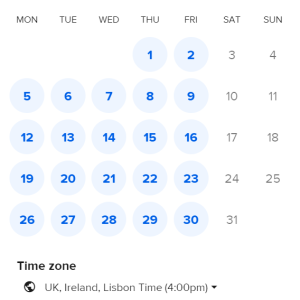
We can also reserve an appointment for 15 minutes on our calender feature above.
5-star ratings on Trustpilot across our divisions
property visits carried out every month
qualified and accredited field-based professionals
property visits by our engineers to date
Simply enter your details and get an instant quote. Alternatively you can call or email us.
Pay securely online or by phone.
Our call centre and live chat is there for you every step of the way.
We’ll contact you to schedule your EICR.
With fast turnaround times your report will be completed in no time.
On average, an EICR inspection takes one to four hours. The length of the test depends on the size of the property, the accessibility of electrical systems and the number of electrical equipment, among other factors.
Additional inspection may be required, depending on the electrician’s findings from the comprehensive assessment.
The average cost of an EICR in London for a two-bed flat is around £150-£190. The price varies depending on:
Location: Properties in the city tend to have a higher cost then those in the suburbs.
Age of the property: Older properties require a more thorough inspection because of the deterioration and wear and tear of the electrical system.
Size of the property: Larger properties require a more extensive inspection.
Type of property: An industrial facility will need to be examined more thoroughly than a flat.
The extent of testing: Although we encourage a thorough inspection of all systems, it might not be feasible given factors like your property’s layout or the nature of your business. Asking the electrician or engineer to inspect only certain areas of the property lowers the cost but may not provide a complete picture of the condition of your electrical system.
Accessibility and condition of the electrical system: If your electrical installations are difficult to access, or if they have deteriorated over time, the contractor might charge higher
After the inspection, the electrician will issue an EICR that you keep until the next inspection date. This is not a certificate, but simply a report that details the overall condition of your installation and the remedial work required, if needed.
The EICR specifies damages, defects, deterioration and other conditions that could put everyone in the building at risk. Pictures might be added to the report to emphasise areas of concern.
The report highlights any issues found and categorizes them according to their severity and urgency using specific codes. Understanding these codes is crucial for addressing potential safety hazards in electrical installations.
Description: Immediate danger present. This code indicates that there is a risk of injury and immediate remedial action is required.
Example: Exposed live wires, which pose a risk of electric shock.
Action Required: Urgent action to repair or make safe immediately.
Description: Potential danger. This code signifies that while there is no immediate risk, the issue could become dangerous if not addressed.
Example: An improperly earthed socket which may not present an immediate danger but could become hazardous.
Action Required: Remedial action needed as soon as possible to remove the potential danger.
Description: Improvement recommended. This code indicates that while the issue does not present immediate or potential danger, improvement is advised to enhance safety.
Example: Installation of additional RCD protection where it is beneficial but not mandatory.
Action Required: Improvement recommended to bring the installation up to current standards.
Description: Further investigation required. This code is used when the inspection cannot determine whether an aspect of the installation is safe.
Example: A hidden cable whose condition cannot be verified without additional testing or access.
Action Required: Further investigation needed without delay to determine the extent of the issue.
If your EICR report reveals issues with your electrical system, the results will be “Unsatisfactory,” meaning remedial work needs to be done. The electrician will provide a quote for the remedial work.
The electrician will indicate a code to specify the extent of the risk and the required action:
Code 1: Danger present. Occupants are at risk of injury and immediate action is needed.
Code 2: Potentially dangerous. Urgent remedial action is needed to make the electrical installation safe.
Code 3: Improvement recommended. This is the only EICR classification code that indicates your electrical system poses no danger, but improvements can be made.
FI: Further investigation is required. This means the contractor can’t determine the safety of the installation without additional information or investigation. An example of this is the lack of a main protective bonding of a Lightning Protection System (LPS), where the contractor must consult with the designer to confirm that it is safe to bond the LPS.
Your EICR is proof that you complied with electrical safety standards and have taken the reasonable steps to ensure the safety of all occupants of your property.
You are required to give copies of EICR to the following people:
On average, an EICR inspection takes one to four hours. The length of the test depends on the size of the property, the accessibility of electrical systems and the number of electrical equipment, among other factors.
Additional inspection may be required, depending on the electrician’s findings from the comprehensive assessment.
Registered in England and Wales
Company No: 13586038
Email: hello@propcert.co.uk
Energy Performance Certificates is a trading name of Propcert Ltd.
2024 PropCert Ltd. All Rights Reserved
Head Office:
182a High Street,
Beckenham
BR3 1EW
0203 011 0613
North:
Unit 5 Fairways Office Park
Oliver’s Place
Fulwood
Preston
Lancashire
PR2 9LF
01772 802 006
Central:
No.301 Elder House,
Milton Keynes,
MK9 1LR
01772 802 006